
A treadmill bought on impulse often ends up under a pile of clothes. A pair of running shoes chosen for their color can cause knee pain by your third run. The right sports equipment isn’t just about price or brand: it needs to suit your body, your activity and your current goals.
Redistributing stress: what equipment really changes in your body
Have you ever felt instantly comfortable trying on a shoe in a store, only to develop aches after a few weeks? This discrepancy can be explained by a phenomenon well documented in biomechanics.
Changing the cushioning or stiffness of a sole doesn’t eliminate stress on your joints. Equipment redistributes loads between your joints rather than removing them. A highly cushioned shoe may ease the strain on your knee while increasing the load on your ankle or hip.
Studies of running shoes show that sole hardness affects injury risk, but the findings don’t apply to every type of runner. A model marketed as protective isn’t a one-size-fits-all way to prevent injuries.
The practical takeaway is simple: an immediate feeling of comfort isn’t enough to confirm you’ve made the right choice. Try the equipment over several sessions before committing. If your gym or store offers a trial period, make use of it. If it still feels right after three weeks, it’s a good fit.
Specialist catalogs let you compare technical specifications before heading out, such as https://azsport.ch, which lists fitness and training equipment with detailed specifications.
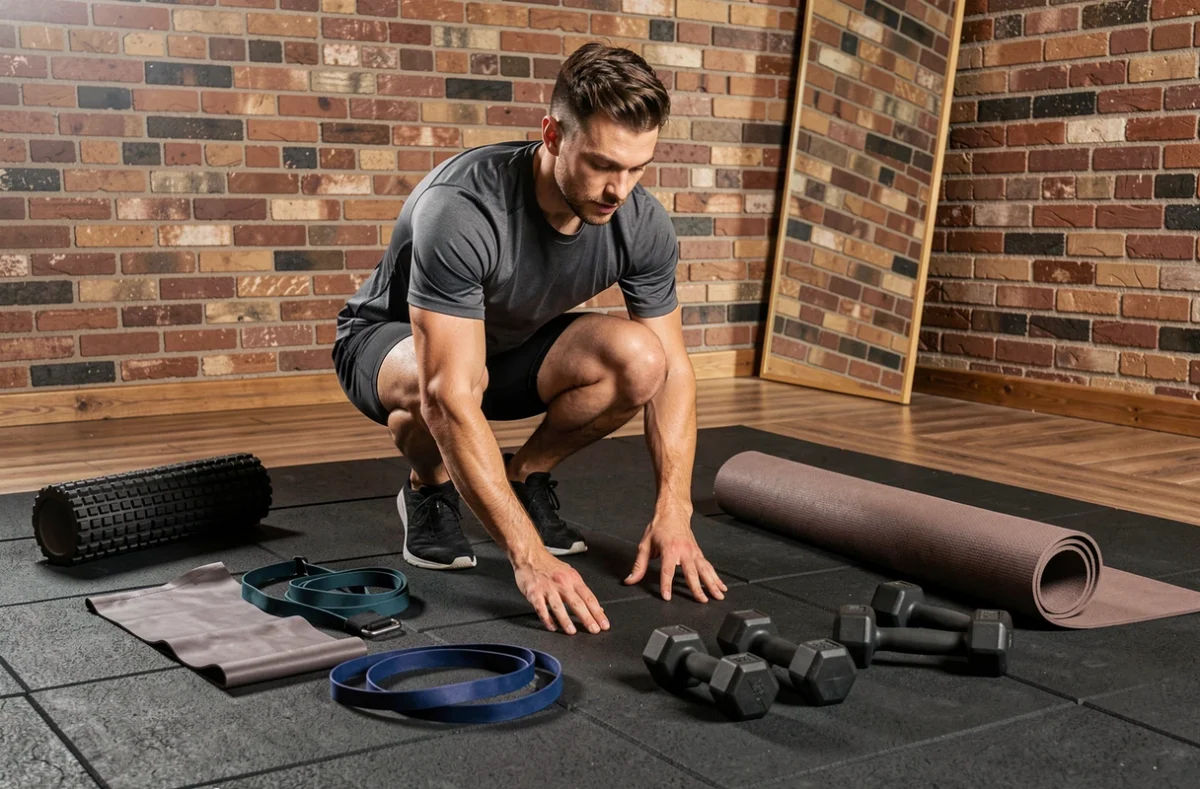
Sports equipment suited to your level: buy for today or tomorrow?
A classic beginner’s mistake is buying equipment designed for experienced athletes. The opposite mistake, made by athletes who are progressing, is holding on to equipment that no longer suits them.
The trap of buying too much too soon
A high-end elliptical with electromagnetic resistance won’t help you make faster progress if you’re just starting cardio at home. Start with equipment that matches how often you actually train, not how often you imagine you will. Two sessions a week don’t warrant the same investment as five.
For strength training, a set of adjustable dumbbells and a sturdy bench cover most fundamental exercises. Weight machines make sense once you’ve mastered the basic movements and want to target specific muscle groups.
When equipment holds back your progress
Conversely, certain signs indicate it’s time for a change. Running shoes with visibly compressed soles no longer provide adequate cushioning. A resistance band that no longer creates any tension during your usual exercises has become too light.
Equipment that no longer provides the right level of resistance can slow your progress without you realizing it. Note the purchase date and estimated hours of use to help you make an objective decision about when to replace it.
Repair or replace your sports equipment: the calculation no one makes
The question of replacement is often treated as a simple either-or: it works or it doesn’t. But there’s a third option that many people overlook.
In France, some sports and leisure items are eligible for the repair bonus. Before throwing out an exercise bike with a squeaky crankset or a treadmill with a slipping belt, check whether the repair is covered by this scheme. You’ll need to find a certified repairer, as not all products and repairs are eligible.
Ask yourself these three questions:
- Does the repair cost more than half the price of an equivalent new item? If so, replacement makes sense
- Does the fault affect a structural component (frame, motor) or a consumable part (cable, bearing, sole)? Consumables can be replaced; structural components rarely can
- Has your level changed to the point that the repaired equipment would no longer meet your needs? In that case, repairing it would only prolong a limitation
Comparing the cost of ownership with the purchase price can change how you choose equipment from the outset. A slightly more expensive item with readily available replacement parts will cost less over three years than a cheap model that can’t be repaired.

Practical selection criteria for different types of training
Rather than listing every sport, let’s focus on the three main types of training and what makes the difference in each.
- Cardio (running, cycling, elliptical): prioritize comfort where your body makes contact with the equipment (sole, saddle, pedals) and consistent resistance. In repetitive exercise, unsuitable cushioning can multiply microtrauma over thousands of movements
- Strength training and conditioning: stability comes first. A wobbly bench or dumbbells with worn grips can compromise safety before they limit performance. Check the manufacturer’s stated maximum weight capacity
- At-home activities (fitness, yoga, stretching): the mat’s surface matters as much as its thickness. A mat that slips on the floor negates every other comfort feature. Test its grip on the surface you’ll actually use
In every case, one well-chosen accessory is better than three unused gadgets. A resistance band suited to your current strength, a jump rope of the right length or a simple interval timer can transform the quality of a workout without a major investment.
Choosing sports equipment is rarely decided at the time of purchase. The real test comes in the weeks that follow, when the equipment meets your body, your routine and your actual motivation. Buy for the activities you do, not the ones you plan to do. And when equipment starts showing signs of wear, consider repair before replacement: your wallet and your joints will thank you.