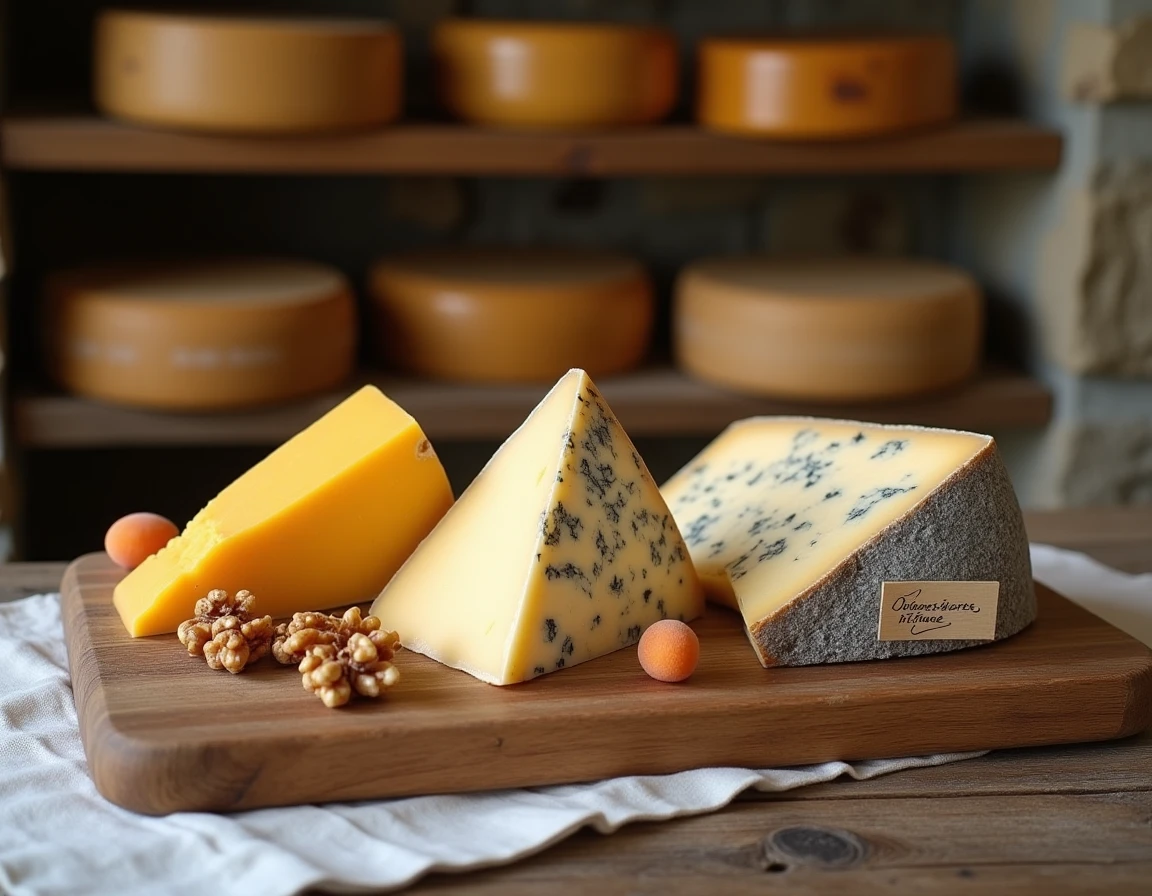
Comté, Beaufort, and Cantal share a technical commonality: they are three French cheeses made from pressed curd, produced from raw cow’s milk and protected by a designation of origin. Their resemblance ends there. Milk, production area, aging, and culinary behavior clearly differentiate them.
Cooked or uncooked pressed curd: the technical divide
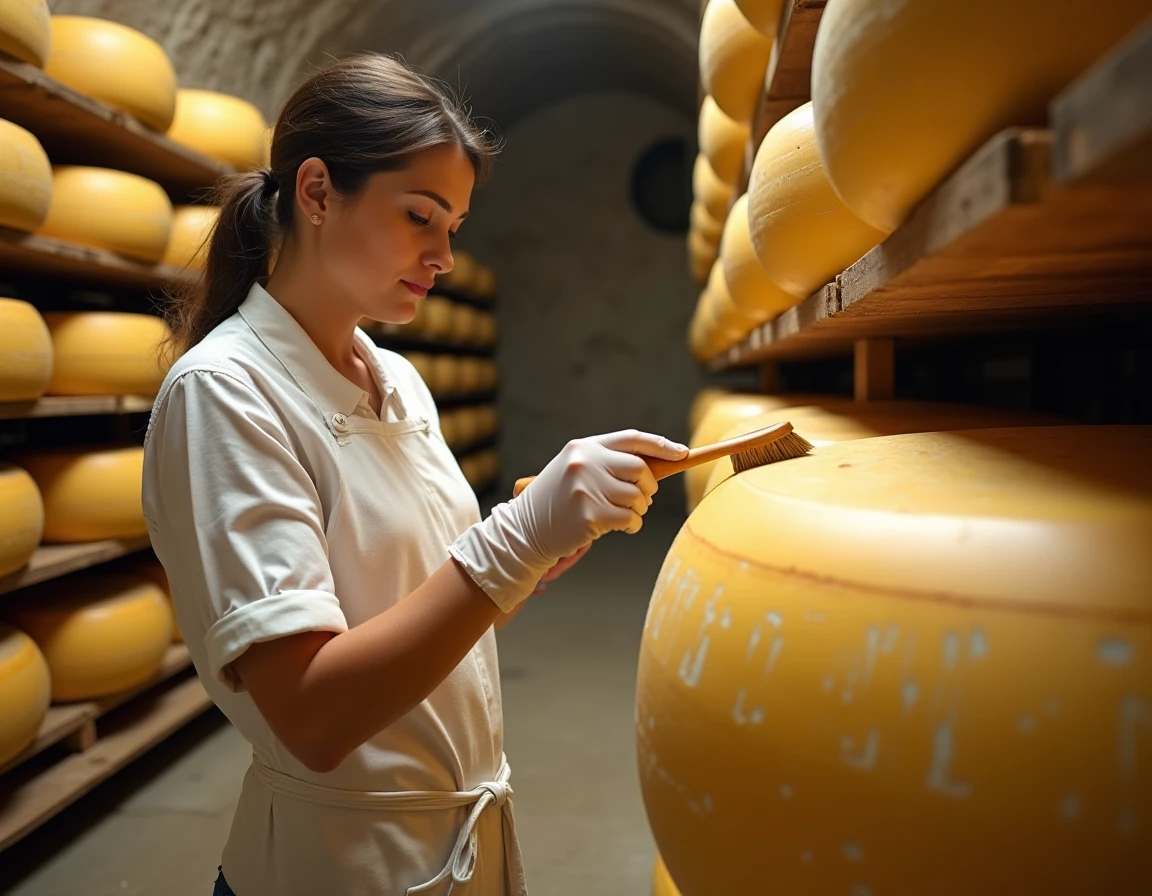
The most significant distinction between these three cheeses lies in the manufacturing process. Comté and Beaufort are cooked pressed cheeses: the curd is heated to a high temperature before pressing, resulting in a dense, supple paste capable of long aging.
Cantal, on the other hand, belongs to the family of uncooked pressed cheeses. The curd is not heated: it is broken, pressed once, crumbled, salted in the mass, and then pressed again. This double pressing without cooking produces a more crumbly texture, similar to tomme.
Understanding the difference between Comté, Cantal, and Beaufort starts with this dividing line: cooking or not of the curd, which determines the texture, melting capacity, and aging potential of each cheese.
Terroir and cow breeds: three designations, three specifications
Each designation defines a production area and imposes specific cattle breeds. Beaufort comes from the alpine valleys of Savoie and can only be made with milk from Tarine or Abondance cows, two breeds adapted to the altitude and steep slopes of the alpine pastures.
Comté is produced in the Jura massif, from milk of Montbéliarde or French Simmental cows. The milk collection area is strictly regulated, and each farm must have a minimum grazing area per animal.
Cantal takes its name from the eponymous department in Auvergne. Its specifications allow for the Salers breed, as well as other dairy breeds present in the region. The milk comes from a volcanic landscape very different from the alpine or Jura terrains, which influences the cheese’s taste from the outset.
How pasture flora changes the cheese
A summer cheese produced in the mountains naturally has a yellower, more aromatic paste. Fresh grass is rich in pigments (beta-carotene) and aromatic compounds that winter hay does not provide. This seasonality is found in all three designations, but Beaufort particularly highlights it with its categories “Beaufort d’été” and “Beaufort chalet d’alpage.”
Aging Comté, Beaufort, and Cantal: durations and results
Aging is the factor that most clearly separates the flavor profiles.
- Comté ages for a duration ranging from a few months to well over a year. The most mature wheels develop tyrosine crystals, small crunchy grains, a sign of advanced proteolysis. A well-aged Comté delivers notes of dried fruits, roasted hazelnuts, and sometimes broth.
- Beaufort benefits from a minimum aging of five months. Its paste remains smooth, without holes (referred to as “blind” paste), with a taste of cooked milk, melted butter, and a slight hint of salt. The wheel is recognized by its concave heel, a result of being molded in a specific wooden circle.
- Cantal comes in three stages: young, intermediate, and old. Young Cantal offers a soft paste and a mild milky flavor. Old Cantal develops a thick rind, a dry paste, and a strong character, with earthy and spicy notes absent in the other two cheeses.
Which cheese melts best, crumbles the least, and adds character in cooking
Culinary behavior is often the most concrete choice criterion, and also the least documented.
Beaufort is the melting champion. Its cooked pressed paste, rich in fat and without holes, melts evenly without excessive stringiness or becoming rubbery. It is the reference cheese for Savoyard fondue and gratins where the texture must remain creamy.
Comté also melts well, but its aromatic profile evolves depending on the aging. A young Comté melts easily in a sauce or béchamel. A well-aged Comté, with its tyrosine crystals, is more of a tasting cheese than a cooking cheese: heat flattens the complexity of the aromas developed during maturation.
Cantal: character, but a crumbly texture
Old Cantal crumbles easily under the knife. In cooking, this crumbly nature can be an asset (for sprinkling on a salad, topping a tart) or a drawback (impossible to obtain nice melting slices in a croque-monsieur). Intermediate Cantal represents the best compromise: soft enough to partially melt, flavorful enough not to disappear against other ingredients.
In summary, for a dish where the cheese must melt without dominating, Beaufort wins. For a tasting platter, aged Comté offers the widest aromatic range. To bring raw character to a rustic dish, old Cantal stands out.
Recognizing these cheeses at the counter
Visually, a few markers allow them to be distinguished without tasting.
- Beaufort has an imposing wheel with a characteristic concave heel. Its rind is smooth, its paste ivory to pale yellow, with no holes.
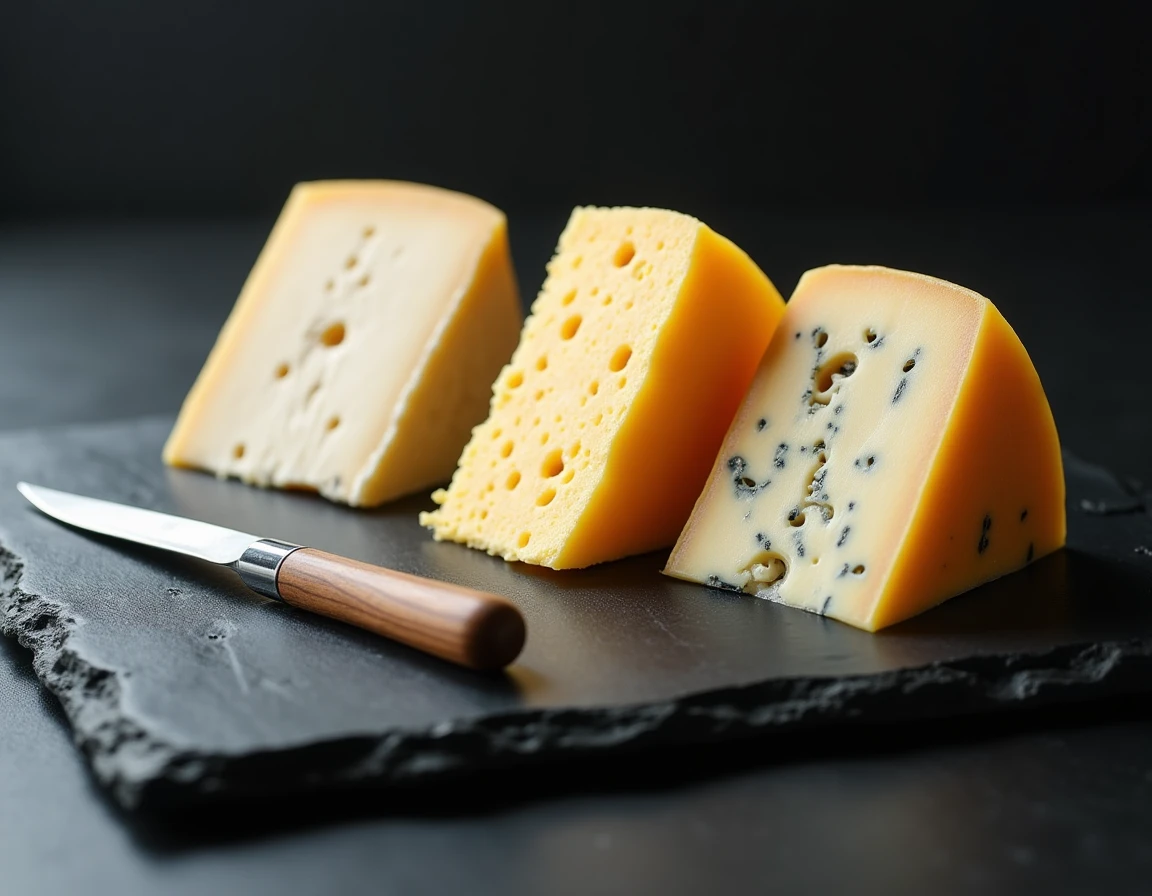
- Comté also comes in a large wheel, but with a straight or slightly convex heel. The paste may show small openings and ranges from pale yellow to deep yellow depending on the production season.
- Cantal has a more stout cylindrical shape, a gray to brown rind (thicker on the old ones), and a paste that breaks into layers or crumbs depending on the aging degree.
Beyond appearance, the nose provides a reliable indication. Beaufort smells of butter and warm milk. Comté develops aromas of dried fruits. Old Cantal emits a smell of cellar, damp earth, distinctly more animal than its two neighboring cheeses.
These three cheeses illustrate how the same starting point (raw cow’s milk, salt, rennet) produces radically different results depending on the cheesemaker’s technique, the altitude of the pasture, and the time spent in the cellar. Choosing between the three is as much about choosing a use as it is about taste.